
Technical Guide
What Are Pharmaceutical Pellets? A Complete Guide for Formulators
“Pellets are right in the middle of the shift from simple tablets to sophisticated multi-particulate drug delivery systems.”
What Are Pharmaceutical Pellets? A Complete Guide for Formulators
Pharmaceutical pellets seem like a big part of how drugs are made these days. I mean, drug delivery is always shifting, and going from simple stuff like tablets to these multi-particulate systems catches my eye. Pellets are right in the middle of that shift.
Formulators and manufacturers use them to solve issues with bioavailability or keeping the drug stable. People keep asking what pellets really are, and why they end up being the go for modified release dosage forms. It feels like they offer more control.
What Exactly Are Pharmaceutical Pellets?
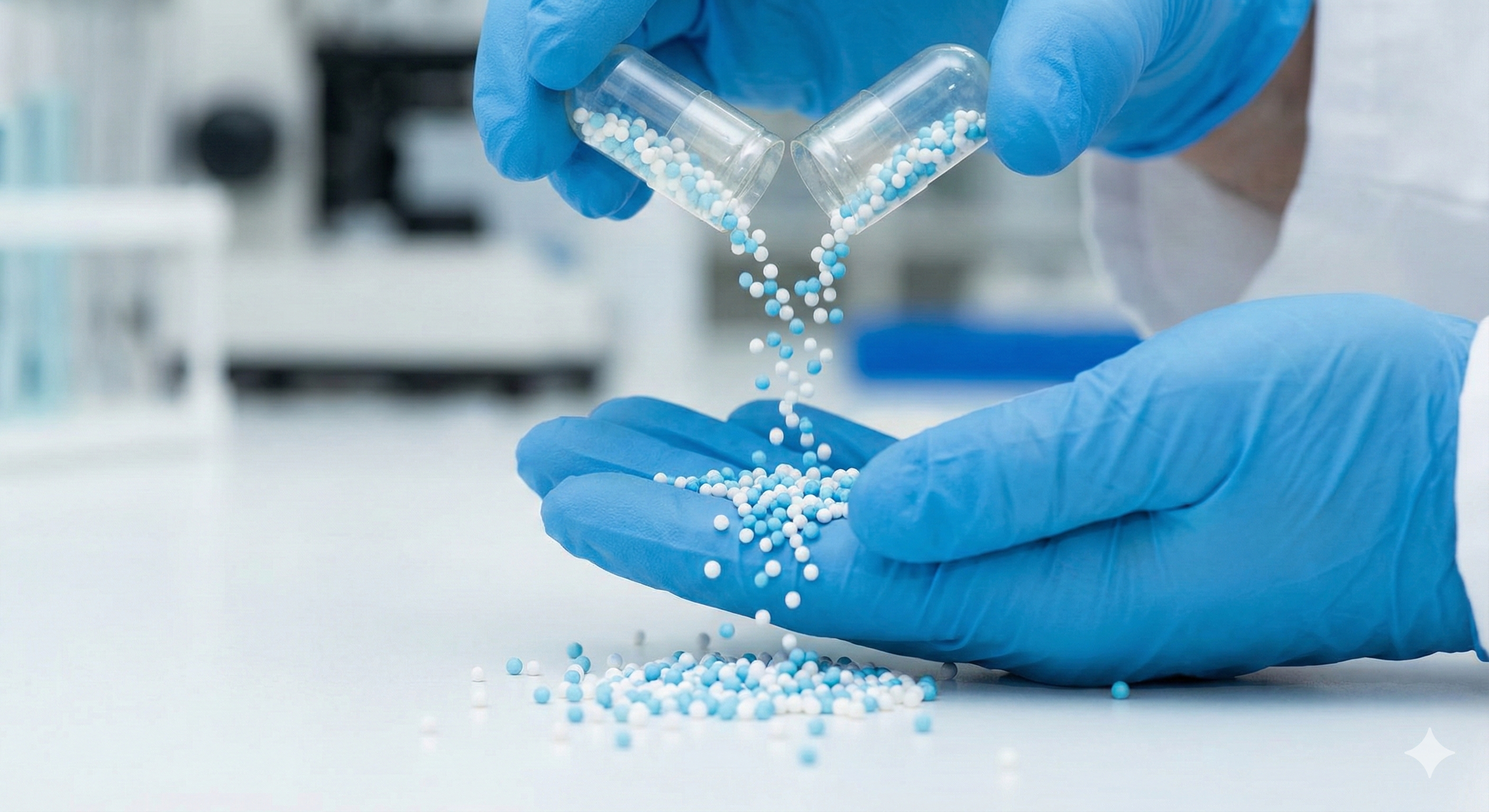
So, a pharmaceutical pellet is basically a small solid unit that flows freely. They are described as spherical or kind of semi-spherical, and their size is usually from 0.5 mm to 1.5 mm. A regular tablet is just one unit, but pellets get put into capsules, like hard gelatin ones, or sometimes compressed into tablets. They carry the active ingredients, the APIs, and that helps control when and how the drug releases in the body.
The Pelletization Process
Pelletization is the process where you take fine powders or granules from drugs and excipients, then shape them into these small spheres that flow well. At places like Rraynex, they make different kinds, but picking the right one depends on the pharmacokinetic profile you want. Like, designing them for quick dissolution or something based on pH levels.
Types of Pharmaceutical Pellets
There are a few types of pellets they manufacture:
Immediate Release (IR) Pellets
Immediate release ones, IR pellets, they disintegrate fast in the stomach fluid to get the drug absorbed right away, maximizing the surface area.
Sustained Release (SR) Pellets
Then sustained release, SR pellets, which are also called extended or modified release. Those use coatings or matrix systems to let the drug out at a set rate, keeping levels steady in the therapeutic window longer.
Enteric Coated Pellets
Enteric coated pellets are for pH dependent stuff. The coating stays insoluble in the stomach's acid, around pH 1.2 to 3.5, but dissolves in the intestine where pH is higher, over 5.5. That protects drugs that don't like acid or avoids irritating the stomach.
Why Partner with Rraynex for Pellet Manufacturing?
Partnering with Rraynex makes sense if you need high quality pellets for stable formulations. They produce pellets, granules, and APIs that meet global standards. They help with customized release profiles to fit your PK/PD needs, and they can scale from small R&D batches to full production. Quality checks include testing for friability, sphericity, and uniformity, which seems important but gets a bit messy to explain fully.
Understanding Release Mechanisms
I think the key is how pellets handle those release mechanisms differently. Immediate ones are straightforward, but the sustained or enteric types add layers that might oversimplify if I dont mention the diffusion or erosion parts. Anyway, it stands out how they solve bioavailability problems compared to single units.
Ready to Optimize Your Formulation?
Whether you need ready-to-fill pellets or specific APIs, Rraynex is your trusted partner in pharmaceutical manufacturing.
Contact Our Team Today to request a sample or discuss your project requirements.
Join the conversation
Be the first to add a comment.